

Transform Your Home on a Budget: DIY Strategies for a New Year Refresh
- buildearthshelter
- Dec 14, 2025
- 4 min read
Starting the New Year with a fresh, inviting home doesn’t have to drain your wallet. Renovating and refreshing your interior on a budget is not only possible but can also be deeply rewarding when you focus on DIY projects that promote a natural and intentional lifestyle. This approach helps you create a space that feels authentic, calm, and uniquely yours without overspending. In this post, I’ll share practical tips for planning your ideal home, skills you can learn along the way, and cost-effective projects that make a big impact. I’ll also include insights from my own experience renovating a rented home, so you can see what’s realistic and inspiring.

Plan Your Vision with Intention
Before picking up a paintbrush or buying materials, take time to envision what you want your home to feel like. A natural and intentional lifestyle means choosing elements that support calm, simplicity, and sustainability.
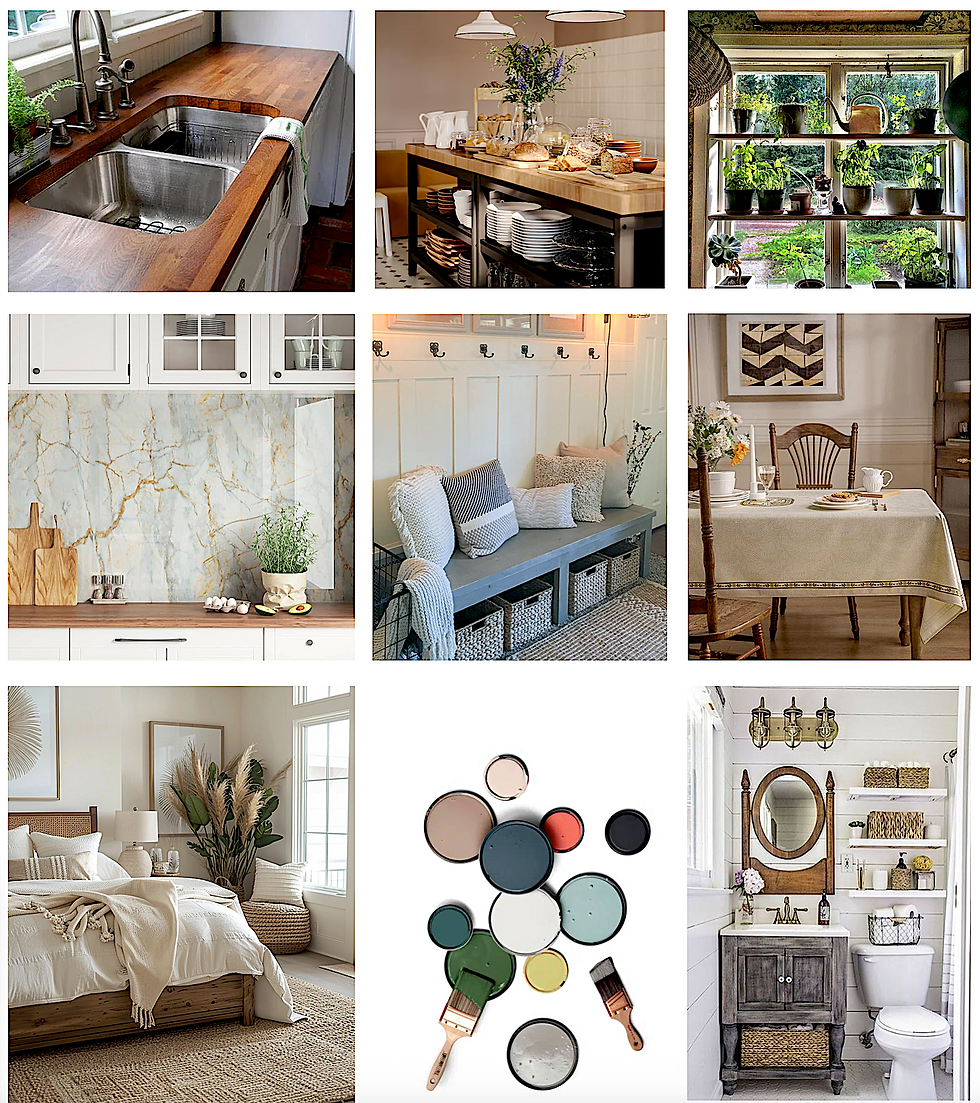
Create an idea mood board: Collect images, fabric swatches, and color samples that reflect your ideal style. This helps you stay focused and avoid impulse buys. It can clarify what items you specifically want to change
Set a realistic budget: Decide how much you want to spend overall and break it down by room or project. Best to use a spread sheet, like the example below, and update as you progress to stay informed on what you are spending.
Prioritize projects: Identify which areas need the most attention or will bring the biggest change and improved function. For example, updating your kitchen or bathroom can improve daily life. Making you more inclined to cook meals from scratch and sharing with family and friends.
Think about function and flow: How do you use each space? What changes would make your routines easier or more enjoyable?
Planning with intention saves money and prevents waste by guiding you toward choices that truly fit your lifestyle and looks beautiful.
Learn Valuable DIY Skills
Renovating your home yourself builds skills that last a lifetime and can save you hundreds or thousands of dollars. Here are some practical skills to focus on:
Painting walls and trim: Learning to prep surfaces and apply paint evenly transforms any room. You can experiment with natural, low-VOC paints for a healthier environment.
Refurbishing furniture: Instead of buying new, give old pieces new life by sanding, staining, or painting. This adds character and reduces waste.
Sewing simple textiles: Making your own curtains, pillow covers, or table runners lets you customize colors and patterns while saving money.
Basic carpentry: Skills like installing shelves or repairing cabinets can improve storage and functionality.
Floor refinishing: Sanding and sealing hardwood floors refreshes them without the cost of replacement.
Many community centers and online tutorials offer free or low-cost classes to get started. Practicing these skills on small projects builds confidence for bigger renovations.
Cost-Effective Projects That Make a Big Difference
Some updates deliver a fresh look without a hefty price tag. Simply decluttering, cleaning and painting makes a big impact even before tackling larger projects, Here are a few other projects that balance impact and affordability:
Update Draperies and Window Treatments
Replacing or sewing your own draperies can change the mood of a room instantly. Choose natural fabrics like linen or cotton in neutral tones to enhance light and texture. Matchstick blinds are inexpensive and add privacy without being too heavy feeling. Best to stay neutral and light on windows. Color can be easily added through throws, pillows and art.
Refinish Floors
If you have hardwood floors, refinishing them can restore their natural beauty. Renting a floor sander and buying sealant costs a fraction of new flooring. For vinyl or laminate, consider peel-and-stick tiles or area rugs to refresh the look. When stuck with wall to wall carpet steam clean thoroughly before moving in. Cover with area rug when staging your new room.
Modernize Kitchens and Bathrooms

These rooms often feel outdated but can be improved with small changes:
Paint cabinets instead of replacing them. If you can't paint thoroughly clean.
Swap out hardware like knobs and handles.
Install a new backsplash using peel-and-stick tiles or washable wallpaper..
Replace faucets or light fixtures with modern, water-saving options.
Replace cold tone light bulbs with warm tone LED lights
Refresh framing and mats on your art and add new art.
Just adding new plants and flowers alone can make a room glow.
Don't forget scent. Open windows regularly to air out. Add favorite scents.
These updates improve function and style without major construction.
Personal Experience: Renovating a Rented Home on a Budget
When we moved into a rented house, I wanted to make it feel like home without permanent changes or big expenses. Here’s what worked for us:
Painting walls: I used removable wallpaper and low-VOC cleanable paint to brighten the space. Cost: about $250 for paint and supplies.
Refurbishing furniture: I found a secondhand dresser and gave it a fresh coat of paint and new knobs for $40.
Sewing curtains: I made simple linen curtains for $80 in fabric and thread.
Updating lighting: Swapped out old fixtures for energy-efficient LED warm glow bulbs and stylish shades for $60.
Adding plants: Indoor plants brought life and improved air quality, costing around $80.
What was spent on our refresh + our DIY labor

Total spent was $2009, and the space feels completely transformed and I can take a lot of it with me when I moved on. These projects taught me patience, creativity, and practical skills that I will always use.
Tips for Staying Motivated and Organized
Renovations can feel overwhelming, especially when working on a budget. Here are ways to keep your momentum:
Set small goals: Break projects into manageable steps and celebrate each completion.
Track expenses: Use a simple spreadsheet or app to monitor spending and avoid surprises.
Gather tools gradually: Invest in quality basics like brushes, a drill, and sewing supplies over time.
Ask for help: Friends or family may enjoy joining you for a painting day or sewing session.
Be flexible: Sometimes materials or plans change. Adapt without stress to keep progress steady.
The rewards are more than worth the effort spent! All the best on planning and building your project.
Here is our Idea Board.
We've done the kitchen, entry and dining room. Bathroom and bedroom yet to do.


Trang chủ O8 mình vừa lướt thử cho biết, kiểu ghé qua xem giao diện ra sao thôi. Cảm giác đầu tiên là bố cục nhìn khá “gọn”, các mục chia thành từng khối nên kéo xuống không bị rối mắt, muốn tìm thông tin gì cũng định hướng được nhanh. Mình thấy họ có nhắc chuyện lượng người dùng hoạt động mỗi tháng hơn 1 triệu, nên cũng dễ hiểu vì sao thao tác chuyển trang đổi mục khá mượt, không bị đứng hay load lâu. Có đoạn cảnh báo về mấy website giả mạo xuất hiện gần đây nữa, đọc qua thấy cũng hợp lý vì dạo này nhiều trang hay bị nhái. Nói chung mình thích kiểu…